

Winter Won’t Wait: Your Simple Guide to Jump-Starting a Car in the Cold
Winter is tough on car batteries. When temperatures drop, your battery has to work harder to start your engine. At the same time, cold weather slows the chemical reactions inside the battery, reducing its power. That combination makes dead batteries one of the most common winter emergencies.
If your car will not start on a cold morning, knowing how to safely jump-start it can get you back on the road fast. This guide walks you through what you need, what to watch for, and when a jump-start is the sign your battery needs to be replaced.
Why Batteries Fail in the Cold
Low temperatures reduce a battery’s ability to hold and deliver power. At 32°F, a battery loses about 20 percent of its strength. At 0°F, it can lose up to 50 percent. Meanwhile, your engine oil thickens, so the battery has to work even harder to crank the engine.
If your battery is already aging or weakened, winter will expose those issues quickly.
What You Need and How to Stay Safe Before a Jump-Start
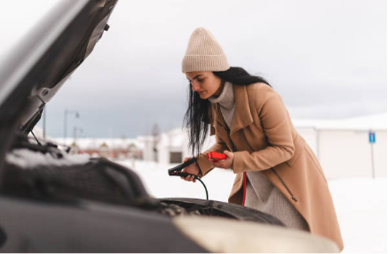
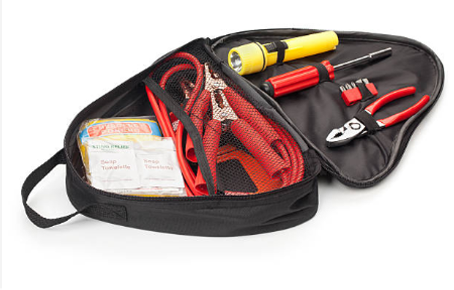
Before attempting to jump-start your car, it helps to have the right tools and understand a few safety essentials. A good set of jumper cables, a healthy power source such as another vehicle, and a flat, dry place to work make the process easier and safer. Safety gloves are also a smart addition to any winter emergency kit. If you don’t have cables with you, someone nearby may be able to help. For future preparedness, consider keeping jumper cables or a portable jump-starter in your trunk, especially during the colder months.
Before connecting anything, take a moment to check the battery and surroundings. If the battery is swollen, cracked, or leaking, do not try to jump-start the vehicle. Call for roadside assistance right away. It’s also a good idea to review your owner’s manual because some vehicles have specific instructions. When handling the cables, keep the clamps apart to avoid sparks, stay clear of the battery, and never lean directly over it. If you notice smoke, sparks, or anything unusual, stop immediately and disconnect everything.
For the full list of tools and the complete step-by-step instructions, visit the Jump-Starting page on AutoBatteries.com.
Common Mistakes to Avoid
- Loose clamps. This is the number one reason a jump will not work. Make sure the cables are firmly attached.
- Wrong cable placement. Always double-check the positive and negative terminals. Positive to positive, and the negative cable should go to a clean, bare metal surface on the vehicle’s frame.
- Connecting the negative cable to the negative terminal on the dead battery. This increases spark risk, use clean bare metal instead.
- Not giving the battery enough time to charge before trying again.
- Ignoring warning signs like smoke, odd smells, or extreme corrosion.
My Car Still Won’t Start, What Now?
Try these quick fixes:
- Recheck the clamps. Even slightly loose connections can prevent a successful jump.
- Give it more time. Let the good vehicle run for several minutes before trying the ignition again. Rev the engine to at least 2000 RPMs to increase the output from the good battery.
If your car still does not start, the issue may be deeper. It could possibly be the alternator, starter, or a severely discharged battery. At this point, call roadside assistance or visit a local store or mechanic.
Does Jump-Starting Hurt My Car?
When done correctly, a jump-start is safe for your vehicle. You are simply giving your battery the extra power it needs to start the engine. Afterward, keep your vehicle running so the alternator can recharge the battery. It is important to note that your alternator likely won’t fully recharge your battery in this time. So the risk of another no-start is much higher. It’s a smart idea to put your battery on a charger at the soonest convenient time. If you're unsure of the battery’s condition, visit a local retailer or workshop for a battery and electrical system test.
When a Jump-Start Means the Battery Needs Replacing
A jump can get you moving again, but it may also be warning you that the battery’s life is ending. Consider replacing the battery soon if:
- The car needs frequent jump-starts. Even after using a battery charger.
- The engine cranks slowly even after driving at highway speeds for 30+ minutes.
- Your battery is more than three to five years old.
- Lights or electrical systems flicker or dim.
- The battery fails again within a day or two of charging.
If you suspect the battery is failing, the Battery Finder on AutoBatteries.com can help you choose the best replacement quickly.
For more details on safely jump-starting your vehicle, visit our Jump-Starting page.